

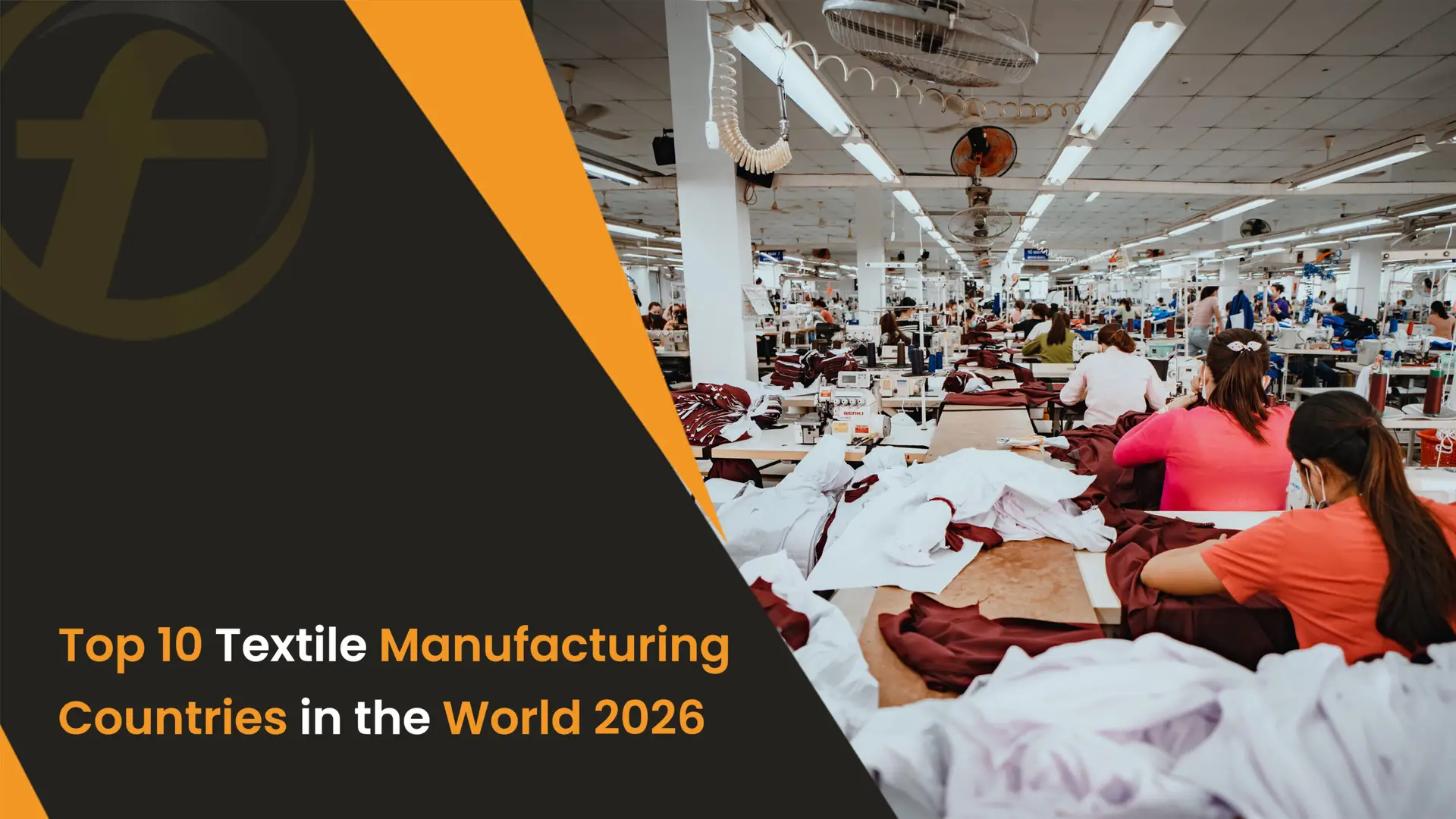
Why is it that some nations dominate the global textile market while the rest grapple with challenges? Competition in the industry is attributed to numerous factors including highly skilled labor, advanced manufacturing, extensive exports, and the use of modern technologies. As the technology accelerates and sustainability starts playing a key role in manufacturing, countries are heavily investing in modern and more efficient production processes. But what are the countries in charge of textile production in 2026?
In this article, we’ll look into the top 10 countries in textile manufacturing in the world 2026, factors responsible for their supremacy, and the latest trends that are shaping the textile manufacturing market.
Major Highlights
- China, India and Bangladesh continue to be countries in textile manufacturing in 2026.
- The rankings depend on how much each country can produce, how much they send to countries, the technology they use and how many skilled workers they have.
- Sustainability and automation are changing how textiles are made.
- Higher costs and tougher rules are causing changes in the textile industry.
- Fubex Lubricants helps improve textile machine performance with high-quality textile lubrication solutions.
Criteria for Ranking Textile Manufacturing Companies
The largest textile manufacturing companies are ranked based on several important factors. These factors show a company’s size, performance, and position in the global textile industry.
Revenue is one of the main ranking factors. It demonstrates the amount of revenue raised from the sales activities of the company. The higher revenue the company has, the higher its financial performance and standing in the industry.
Another important aspect is production capacity. It shows the capacity of the company to produce textile goods. Companies with greater production capacity can satisfy customers’ demands better.
Another important factor influencing rankings is market presence. Market presence refers both to the geographical scope of operations of the company and its recognition among customers. Manufacturers that operate in several countries with a wide distribution network will rank higher than those with limited activities.
Moreover, innovation is becoming more and more important. Companies that invest in the development of new technologies will be more competitive. Innovation is important in order to be able to respond to the changing needs of consumers. Thus, by evaluating cash flow, production capacity, market presence, and innovations, experts are able to identify the best textile manufacturers worldwide.
Top 10 Largest Textile Manufacturers Worldwide
The textile industry is made up of numerous major firms where industries produce fibers, fabrics, yarns, and clothing for customers across the globe. The following list some of the largest manufacturers in the textile industry.
1. Arvind Limited
Set up in 1931, the company, Arvind Limited is located in Ahmedabad, India. It is primarily known for the great denim-related products the company produces, aside from woven fabrics and textiles in general.
The company has also distinguished itself through the use of technological methods brought about by the advancement in technology, as well as the attempt to manufacture products sustainably.
2. Vardhman Textiles Limited
Vardhman Textiles was founded in 1965, and its headquarters is located in Ludhiana, India. The firm is primarily known for its yarn as well as fabric and garment production, greatly focusing on innovation and quality.
3. China National Textile and Apparel Council
The CNTAC came into existence in 2001 and plays its role of supporting and overseeing the textile and apparel industry in China. The CNTAC plays a prominent role in ensuring that China remains among countries producing the biggest amount of textiles.
4. Toray Industries, Inc.
Founded in 1926, Toray Industries is based in Tokyo, Japan. The company produces synthetic fibers and high-performance textile materials used in many industries.
5. DuPont de Nemours, Inc.
Founded in 1802, DuPont is headquartered in Wilmington, Delaware, USA. It is known for producing advanced fibers and high-performance materials used in textiles and other industries.
6. W. L. Gore & Associates
W. L. Gore & Associates was started in 1958. This company is famous for making GORE-TEX. GORE-TEX is a fabric that is waterproof and breathable. People use GORE-TEX for clothing and boots.
7. Lenzing AG
Lenzing AG was started a time ago in 1938. This company is in Austria. They make fibers from things that can be renewed. Lenzing AG is known for making things in a way that’s good for the earth.
8. Adidas AG
Adidas AG was founded in 1949. Now Adidas is a popular brand for sports clothes. They make kinds of fabrics for clothes, shoes and sports things.
9. Indorama Ventures PLC
Indorama Ventures PLC was started in 1994 in Bangkok, Thailand. This company is big in making polyester fibers and textile things. They focus on making things in a way that’s sustainable.
10. Shenzhou International Group Holdings Limited
Shenzhou International Group Holdings Limited was founded in 2005. This company is one of the biggest in the world for making garments. They make quality clothes for famous companies all over the world. Shenzhou International Group Holdings Limited is very good at what they do.
These companies are leaders in the textile industry because of their large production capacity, product quality, innovation, and commitment to sustainable manufacturing.
Regional Analysis of Textile Manufacturing Leaders
The textile industry is located in many places worldwide but some areas are more successful than others. Each region has its own benefits and difficulties.
Asia is the largest textile producing center in the world. Countries such as China, India, and Bangladesh keep a big share of textile production. This is because of the availability of skilled workers, big factories, and developed supply chain facilities.
The support of government and trade agreements help these countries as well. However, rising labor costs and strict environmental regulations cause new difficulties. Many companies make investments in the development of sustainable production now.
Europe is famous for producing textiles of high quality. Countries like Italy and Germany are known for their high-quality and craftsmanship but the European textile industry has a problem because of high labor costs and strict environmental laws, which may hinder their competition.
The Americas also play an important role in textile manufacturing. The United States is increasing local production to strengthen its manufacturing industry. At the same time, the textile production industries in Latin America are gaining popularity based on their proximity to the U.S. market and benefits of trade agreements.
In summary, every region has its own advantages. Asia is the leader in large-scale production, Europe is famous for quality, and the Americas provide companies with strategic locations for manufacturing and trading. The combination of these advantages is useful for the development of the global textile industry.
Innovations in Textile Manufacturing: Technology and Sustainability
The textile industry is changing due to the introduction of new technologies and sustainable methods of manufacturing. These innovations make production easier and less harmful for the environment.
The most notable innovation in the field is that of automation. Modern machinery and robotic inventions have increased the speed of production, quality of textile materials, and lowered waste throughout manufacturing processes.
Artificial Intelligence (AI) has become a highly effective means to streamline textile production processes as with AI tools businesses can foresee possible demands of customers, monitor their stock, and design the production of textiles.
Another trend in the textile manufacturing process is sustainable practices. Thanks to modern technologies it is possible to implement waterless dyeing, which consumes significantly less water than classical dyeing methods. Moreover, companies have started to use recycled fibers to create new textile materials, thus contributing to waste reduction and conservation of natural resources.
Therefore, the described innovations are aimed at increasing efficiency, cutting down expenses, and preserving ecosystems.
Challenges Facing Textile Manufacturers in 2026
Textile manufacturers are expected to face several challenges in 2026. One of the biggest issues is supply chain disruptions. Production can be hampered and costs elevated by delays in sourcing materials and high transport costs. To circumvent these problems, businesses are collaborating with several vendors and are continuously enhancing their logistics processes.
More rules from the government concerning ecology and labor are another challenge for businesses. The government has come up with rules that seek to promote sustainable manufacturing and fair labor practices. Companies may have to start using green technology and to change their production methods.
Another issue affecting the industry is that of changing consumer tastes. Increasing numbers of consumers are searching for items made from recycled materials and in an ethical and environmentally-friendly way. Producers will have to adapt by using sustainable resources in their production processes.
The companies that aim to compete in the textile industry must invest in new technology, enhance their operating efficiency, and focus on sustainability. The most responsive companies will be successful in the future.
Future Trends in the Textile Manufacturing Industry
The landscape of the textile production sector will continue changing in the next few years due to advancements in sustainability, technology, and the ability to satisfy customers’ needs.
The circular economy is one of the trends to have emerged over the years. Circular economy refers to practices focused on waste minimizing through the recycling of used fabrics, thereby creating new products. Nowadays, there are lots of manufacturers that actively use recycled materials in their production process.
E-commerce has revolutionized the business world. The ever-increasing share of customers opting for buying goods online makes companies speed up the production process. In such a way, producers are implementing digital technologies, data processing means, and artificial intelligence into their work.
Sustainability is yet another emerging trend in the production of textile goods. Today, more and more young customers opt for sustainable and ethically produced textiles.
Thus, it is evident that the future of textile production lies in the economic advancement of the textile industry through the implementation of the latest technological developments and sustainability principles into the production process, thus ensuring high satisfaction of customers with the services.
Final Takeaways
The textile industry continues to grow as countries invest in better technology, skilled workers, and sustainable manufacturing. Textile producing countries with the highest production in 2026 have a significant effect on the global supply of textile materials, clothes, and other textile products. Apart from increasing production, countries also strive for innovation, high quality, and using sustainable production methods.
In addition to that, increased prices, changing customer demands, and more strict environmental laws influence the industry in years to come.
Countries with new production systems and sustainable manufacturing will have more chances to be successful in the future. Whether you’re looking to improve machine performance or reduce maintenance costs, Fubex offers trusted lubrication solutions to help your textile business achieve better results.
FAQs
Q1: Which are the top 5 textile manufacturing countries in the world?
China, Bangladesh, Vietnam, India and Turkey are among those countries that rank in the five, in textile production.
Q2: What is the textiles 2030 roadmap?
The Textiles 2030 Roadmap is an initiative that aims to create a community of government leaders, businesses, community groups, and NGOs. It sets out what can be achieved by these entities in order to reach their goals.

Editor-at-Large
A passionate writer in the lubricant industry, Awais Iqbal has been covering oils, greases, and industrial fluids since the start of his career. At 25, he’s already written for blogs, catalogs, and brand guides across the UAE. Awais’s insights help companies connect with their audience, and his clear, helpful writing style is trusted by brands in the region.