

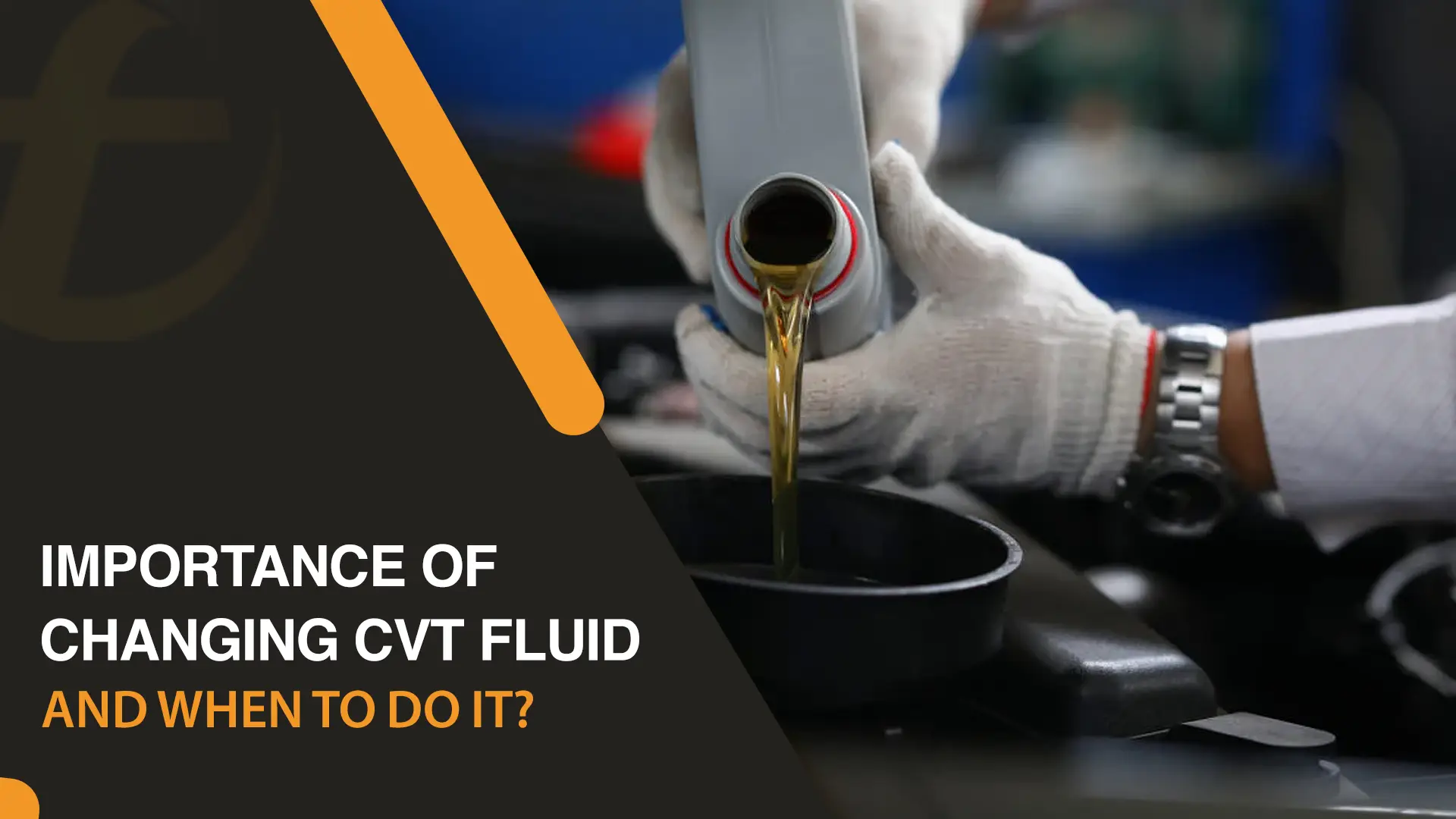
Have you ever wondered what keeps your CVT transmission running smoothly every time you drive? Another significant component of car maintenance includes the CVT fluid. Many individuals do not think of the importance of this transmission fluid because they do not have to change it often like they do with the engine oil. Given enough time, the fluid eventually gets damaged because of exposure to heat and friction resulting in a poorly functioning transmission.
The CVT is different from the standard automatic transmission. The normal automatic model is based on fixed gears, while the CVT uses a belt and pulley system that helps optimize acceleration and fuel usage. For the belt-and-pulley system to work effectively, you always need to use clean and high-quality transmission fluid.
Thus, you should replace the CVT fluid regularly. At Fubex Lubricants, we offer high-quality transmission fluids designed to deliver smooth performance and reliable protection. Enjoy fast shipping, a price match guarantee, and no-questions-asked returns. Need help choosing the right oil? Call us at +971 50 544 9614 — our friendly team is ready to assist!
Awais I., Sales Director, says, “Timely replacement of the CVT fluid helps protect your transmission from premature wear and development of problems with performance. Clean and good-quality CVT fluids are vital for lowering transmission wear and boosting performance.”
In this guide, you’ll learn why CVT fluid changes matter, when to replace the fluid, and the signs that it’s time for service.
Key Takeaways
- Change your CVT fluid on time to improve performance and extend transmission life.
- Watch for signs like jerking, strange noises, dark fluid, or a burning smell.
- Every time you use your car, make sure that the proper CVT fluid is used.
- Bad situations during driving may require regular oil changes.
- Proper maintenance ensures that expensive repairs will not occur.
What is a CVT?
A Continuous Variable Transmission is an automatic transmission that comes with an interesting twist. Rather than employing fixed gears like the usual automatic transmission, this particular one uses belts and pulleys to make it work. Such a system allows the engine to create power without any bumps while also saving on gas. Many automobiles today, especially hybrid ones, are produced using the CVT technology.
CVT vs. Traditional Transmission
A CVT works differently from a traditional automatic transmission. The standard gearbox has a certain amount of gears while a CVT shifts through many gear ratios without switching between gears. Such a transmission system ensures that the engine will be working at maximum efficiency and give a better driving experience and improved fuel economy.
It should be noted that CVTs require proper maintenance in order to ensure their good operation. The CVT transmission is more sensitive to the quality of the transmission fluid compared to the traditional transmission. Timely replacement of the CVT transmission fluid will help maintain good performance of the transmission system.
Importance of Regular CVT Fluid Changes
CVT fluid is very important for your transmission. However, the fluid degrades due to heat, dirt, and other impurities. In this case, the transmission becomes unable to function properly and receive adequate protection.
Dirty or degraded CVT fluid may result in poor performance of your CVT, difficulty accelerating the car, and wear of the transmission components. Fluid replacement prevents such issues and keeps your CVT working well for a long period.
If you fail to change the CVT fluid, you will have to make costly repairs or replace the entire transmission system. This means that fluid replacement is an easy solution to prevent potential problems.
Signs of Deteriorating CVT Fluid
An understanding of the symptoms of worn CVT transmission fluid will ensure that you can solve any issues with the transmission before they become severe. The following is a list of common signs of worn CVT fluid:
- The vehicle slips and jolts during acceleration.
- Accelerations become slow and/or rough.
- Strange noises are heard such as whining or grinding.
- Fuel consumption increases.
- The smell of burning fluids is detectable.
- CVT fluid is dark, dirty and cloudy rather than clean and clear.
- There is a transmission or check engine light displayed on the dashboard.
You should have your transmission checked if you have experienced any of the aforementioned problems.
Recommended CVT Fluid Change Interval
Most car makers advise replacing CVT fluid between 30,000 and 60,000 miles, based on the kind of vehicle and the way you drive. In case you tend to drive mostly through heavy stop-and-go traffic, pull a load that is heavy, or drive uphill, it might be necessary to replace the fluid sooner.
Be sure to always consult your vehicle owner’s manual for accurate information regarding replacement. The right fluid replacement will make sure the transmission functions well and has an increased life span.
It could be that even if the fluid appears to be clear and clean, its effectiveness has worn off, which means it is crucial to maintain regular replacement.
Do You Drive in Severe Conditions?
Nevertheless, there may be cases when your driving pattern makes your transmission vulnerable to excessive wear and, consequently, decreases the life expectancy of your CVT fluid. It would be necessary for you to change your CVT fluid frequently if you happen to drive your car in the following conditions:
- Repeated Stop-and-go Driving Conditions: The repeated process of stopping and starting your vehicle will result in extra pressure on your transmission and overheating. This will lead to the premature degradation of your CVT fluid.
- Dragging Trailer or Additional Weight: The dragging of a trailer or carrying additional weight will make your transmission work harder.
- Driving in Hot Weather Conditions: Hot weather might heat up the transmission causing premature degradation of the CVT fluid.
- Short-distance Drives: Driving relatively short distances will prevent your transmission from reaching its working temperature, which leads to the formation of moisture within the system.
If you drive your car under such conditions, it is recommended to keep an eye on your CVT fluid.
Changing Your CVT Transmission Fluid: The Key to Proper Maintenance
Fluid change is one of the most crucial aspects of CVT maintenance. Fresh fluid will ensure the smooth running of the transmission by lubricating it, reducing friction, controlling heat and ensuring smooth operation.
Follow the Recommended Fluid Change Interval
The ideal time to replace CVT transmission oil will differ based on different manufacturers; however, some of the commonest intervals are from 30,000 to 60,000 miles. The ideal interval, however, is determined by various factors, such as how you drive the car and the environment that you operate in. For example, drivers of cars who usually tow or drive in rough terrain must change their fluid earlier than other drivers.
Select the Proper CVT Fluid
As with all vehicle maintenance activities, it is essential to select the proper CVT fluid. Each vehicle is designed for a specific CVT fluid. Otherwise, poor vehicle performance, rough shifting, or damage to the transmission may be caused by incorrect fluid selection.
In case you do not know the fluid your car requires, consult the owner’s manual or a skilled technician.
Maintain the Correct Fluid Level
Another aspect is the proper level of the CVT fluid. Both too little or too much fluid may negatively impact the transmission and cause excessive wear. By using the recommendations given by the manufacturer concerning the fluid selection and fluid level, you will ensure the long and trouble-free operation of your CVT.
CVT Fluid Change Process
Typically, a CVT fluid change begins with draining the existing fluid in the transmission. Following this, an inspection is carried out on the transmission pan and filter to ensure that there is no dirt or damage.
Some vehicles may also need a transmission flush or a special computer procedure to complete the service. Because every vehicle is different, it is important to use the right fluid and follow the manufacturer’s instructions.
DIY vs. Professional Service
DIY enthusiasts would opt to change CVT fluid to cut costs. But changing CVT fluid is more difficult compared to changing regular oil. Special equipment and processes are required to change CVT fluid in some cases like measuring its temperature or resetting the transmission system. Improper use of fluid or overfilling or underfilling will cause damage to the transmission.
The expert technicians have access to proper equipment and skills needed for the task. Although DIY servicing can be cheaper, professional servicing protects your transmission from costly damage. For most drivers, having the CVT fluid changed by an experienced mechanic is the safer choice.
Selecting the Right CVT Fluid
It is crucial that the correct CVT fluid be chosen in order to ensure that your transmission operates smoothly. As compared to other automatic transmissions, CVT requires special fluid. The use of other fluids such as the automatic transmission fluid will result in a lack of optimal performance and could also cause harm to the transmission system.
To determine which type of CVT fluid should be used in your vehicle, you can refer to your vehicle’s manual. To guarantee that your vehicle will function effectively and safely, you can consider using Fubex Velomax CVT Fluid. This fluid has been developed to offer adequate lubrication, minimize wear, maintain temperature control, and facilitate smooth operation of your transmission under all conditions.
Final Takeaways
One of the best ways of ensuring that your transmission works well is by changing its CVT fluid regularly. The use of fresh fluid reduces the chances of friction and overheating as well as ensures proper functioning of the transmission.
In order to prolong your transmission life and keep it functioning properly, you should follow the service schedule, use the correct CVT fluid, and address any problems that may arise.
FAQs
Q1: Should you change “lifetime” CVT transmission fluid?
Yes. “Lifetime” CVT fluid does not last forever. Over time, heat, contamination, and the drive itself will deteriorate the fluid, which is why it has to be changed after some time so as to prevent the transmission from getting worn out.
Q2: Can I use regular transmission fluid in a CVT?
No. It is never advisable to use ATF in CVT. This type of transmission uses a different type of fluid, and any mistake on this may lead to poor performance or even transmission failure.